Shopping Cart
€25.00 more for free shipping.
 Bold hair accessories

The Bohomane team
Hello everyone!
Here we are again with a new article, today we are going to learn more about the origin and manufacturing of fabrics!
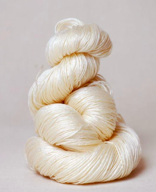
You must first know that the fabric is made up of threads which are made up of fibers.
The action of going from a fiber to a thread is called spinning.
The fabric is a soft and resistant textile material which is obtained by the interweaving of the warp and weft threads using the weaving method.
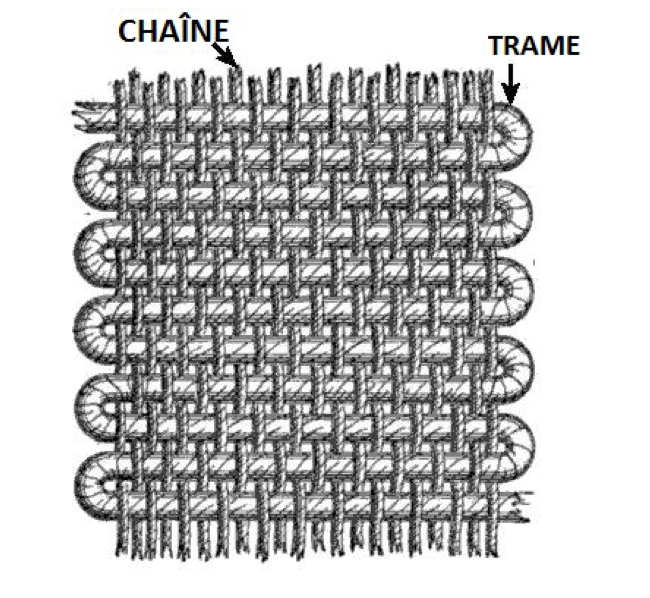
The basic principle of weaving is as follows: threads must be intertwined to obtain a fabric which obviously varies depending on the techniques chosen.
It is possible to classify textile fibers (which are therefore used to create yarns) according to their natural or chemical origins.
They can be of animal origin:
Mohair: the goat!
The alpaca: the llama!
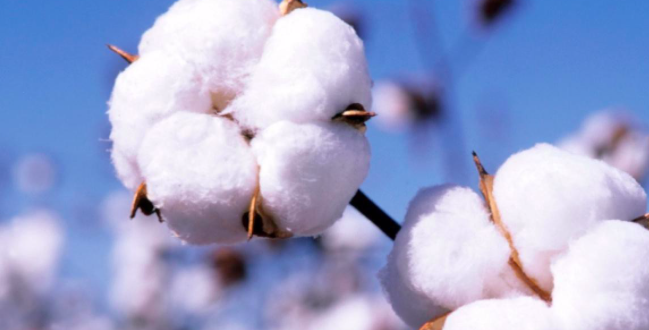
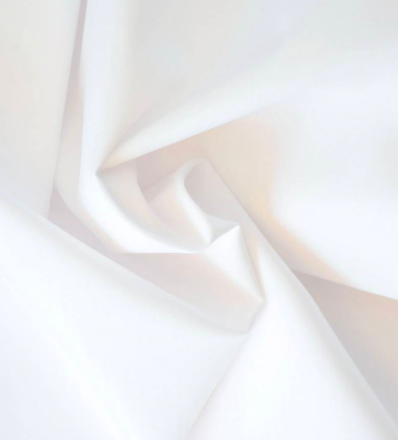
Angora: the rabbit… Or even plant-based and can come from seed: Cotton Linen Rummy… Or from flowers: Rafia Bamboo… But also fruits or sap, for example rubber. Here is the essential for natural fibers however for various reasons; such as the cost of production, or to compensate for the insufficiency of nature there are fibers of chemical origin. They can be either artificial; Coming from a natural base (plant waste) mixed with chemicals which are set on fire and this produces cellulose (an element used to make threads). This is the case for acetate, triacetate, viscose and modal. Either they can be synthetic; These are fibers made from products most often extracted from petroleum. This is the case for polyamide, polyester,… There are therefore numerous textile materials, of plant or chemical origin. The transition from fiber to textile material It is important to keep in mind that a textile material does not arrive as is, ready to be used in the making of articles. There is a set of operations that allow fibers to be transformed into textile materials, we call these processes. First the fibers are first transformed into yarns at the spinning stage. The yarns are then transformed into fabric either by weaving, knitting or other techniques. Then, there is finishing, by different mechanical or chemical operations. It gives the textile their final appearance and their usage properties. What is ennoblement? Fabrics are rarely used as they fell from the loom. The finishing gives them their appearance and their usage properties. So we have 4 main categories of finishing operations; - firstly, preprocessing - secondly, dyeing - third, printing for printed fabrics - last, the primers 1) elimination of foreign products, generally speaking, pretreatments are intended to eliminate products such as waxes, fats, plant debris foreign to the treated material which could react either differently to the dye or interfere with the normal reaction of the fabric with the dyes and could thus cause unison defects. 2) dying aims to give a fiber, a thread, a fabric, or a finished article, a specific color most often different from its natural color or from white using dyes. 3) Printing: can be considered as the art of locally and precisely applying printing details to one side of a fabric, clothing or any other article in order to decorate it. 4) There are several printing techniques: -Frame printing; screen printing technique, these are flat areas. -Photostranphere -Digital printing 5) These are the mechanical or chemical operations that are carried out on the fabric in order to give them the presentation, appearance and qualities appropriate to their use. Now you roughly know the main points of manufacturing a textile material! We can then take a closer look at certain subjects! One of the most common textile materials, cotton. Of plant origin, it is the filamentous material which surrounds the cotton seed. From this material several bases can be made such as cretonne, poplin, muslin, suede, … Spinning is the operation of transforming raw cotton into thread. The transformation takes place in several steps, 5 in total: Finally, several ribbons, parallel and twisted, are stretched and twisted together to produce the final strong wire. Regarding bamboo, you should know that to obtain a material most of the time viscose is added. It is generally a material obtained via a fairly significant chemical transformation process. Bamboo in its “raw” state is not actually used in the manufacturing process, as it is mixed. Bamboo textile fiber is therefore not a natural or organic textile fiber (such as cotton, linen, hemp) but an artificial textile fiber, even if bamboo cultivation is initially certified organic. The manufacturing process is, more precisely and in summary, made up of the following steps: -Then to make it swell, we dissolve it in caustic soda. -To make the material soluble, we add carbon disulphide In order to create a textile material based on bamboo, it is necessary to add other elements. Most of the time viscose is added. To obtain and create yarns mixing bamboo and viscose, we follow the following steps; -And we dissolve everything in sodium hydroxide, the goal being to recover a viscous-appearing liquid. Hence the name viscose. -To finish and obtain threads, we filter the viscose and make a sulfuric acid bath. We subsequently manufacture a textile material with its threads which gives rise to a fabric made from bamboo. Viscose is an artificial fiber made from cellulose extracted from plants and then transformed. Naturally shiny, it can be matted by adding chemicals during spinning. Cellulose is a carbohydrate, which mainly makes up the wall of plants. In our example; viscose is made from wood pulp, which makes it a cellulosic fiber, like cotton or linen. It is often considered to be only partially man-made. Many fibers are used to design new fabrics. The manufacturing of the fabric always follows the different rules stated above. However, the fiber used as well as the added products provide a different finish, hence the presence of many varied textile materials! Find these superb textile materials in headbands and/or scrunchies on our e-shop! We hope to have enlightened you on certain points! The Bohomane team Cotton, a perfect material!
Bamboo
-Cellulose is extracted from bambooViscose

But what is cellulose?
-10%
on your
next order
promo code sent by email
no spam ♡
